从美国FDA科学角度对药物杂质进行(Q)SAR评估Naomi L. Kruhlak, Ph.D.
Scientific Lead, Computational Toxicology Consultation Service Division of Applied Regulatory Science Office of Clinical Pharmacology Office of Translational Sciences FDA’s Center for Drug Evaluation and Research 2019 Pharmaceutical Industry and Regulators Symposium, Brasilia, Brazil 2019年制药行业和监管机构专题讨论会,巴西利亚,巴西FDA/CDER使用的(Q)SAR软件
| |
| Model Applier–Statistical Models | |
| |
| |
| Model Applier – Expert Alerts | |
| |
Different methodologies yield different predictions •Predictions are complementary•Yields higher sensitivity and negative predictivity •Second statistical system improves coverage Predictions are chemically meaningful and transparent •Structural alerts and associated training set structures can be identified to explain why a prediction was made 可以识别结构警示和相关的培训集结构,以解释为什么做出该预测•Application of expert knowledge is facilitated Software and models are publicly available •Our results are reproducible by pharmaceutical applicants and othersHow to Apply (Q)SAR Under ICH M7 “计算机毒理学应采用(定量)构-效关系((Q)SAR)方法学进行毒性评估,目的是预测细菌致突变试验(参考文献6)的结果。应采用两种互补的(Q)SAR预测方法。一种方法应基于专家知识规则,另一种方法应基于统计学。(Q)SAR 模型采用的这些预测方法学应遵循经济合作与发展组织(OECD)制订的一般的验证原则。”
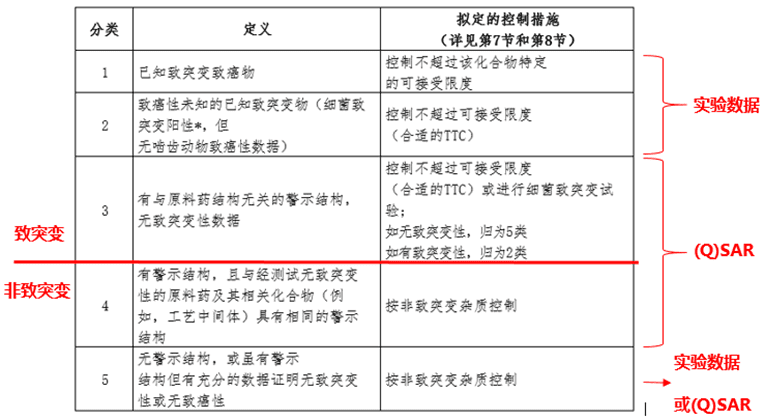
”如果经两种互补的(Q)SAR方法(专家知识规则和统计学)预测均没有警示结构,则足以得出该杂质没有致突变性担忧的结论,不建议做进一步的检测(归为表 1 中的 5 类)。”
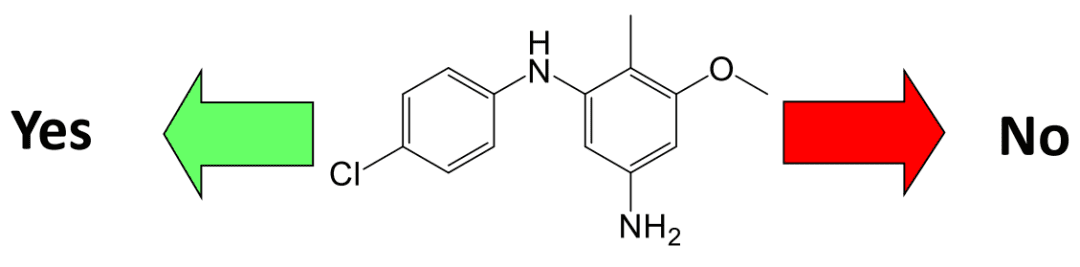
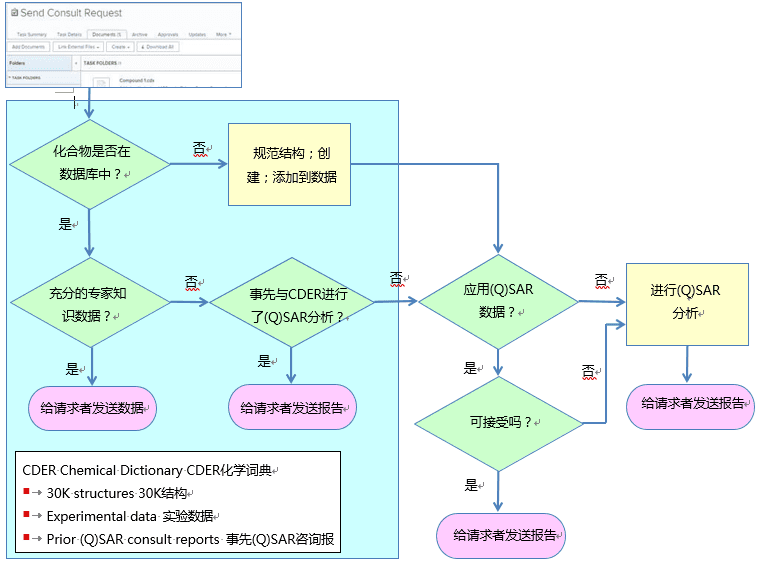
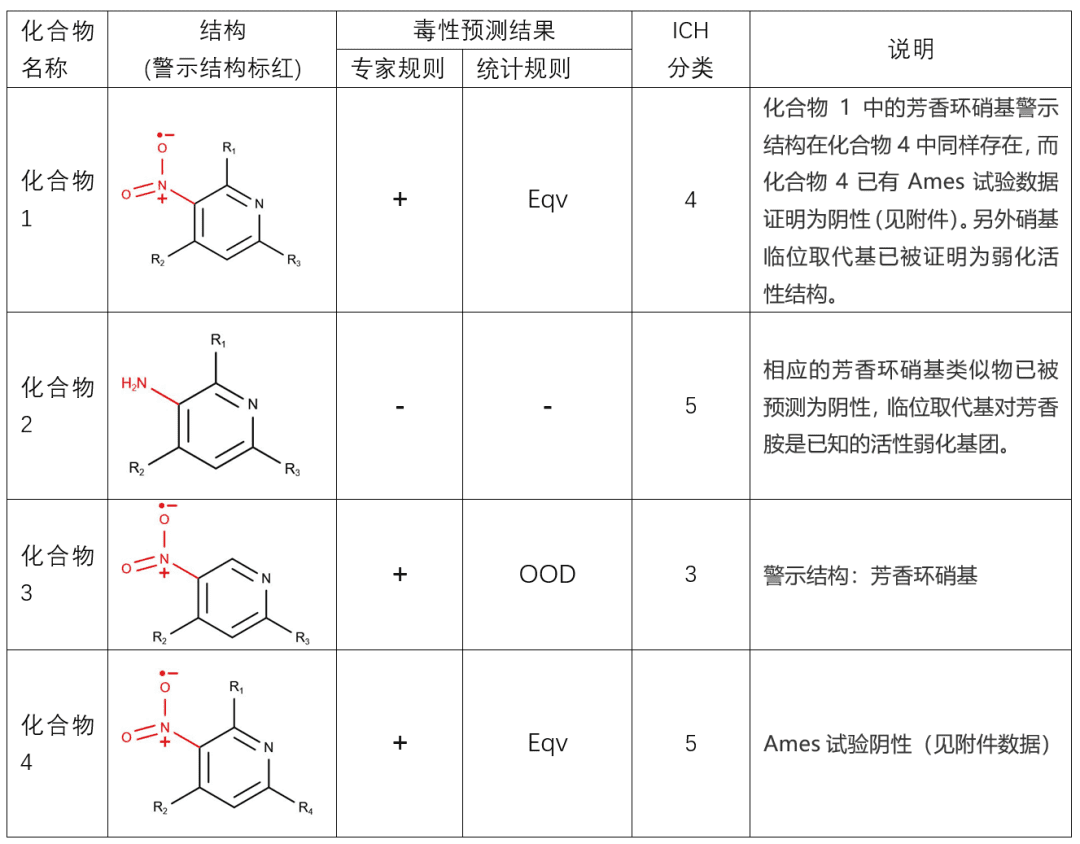
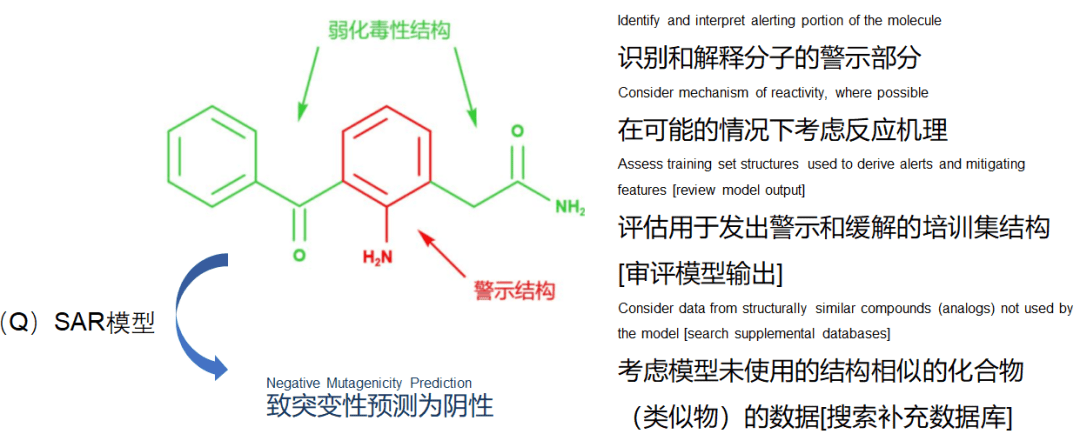
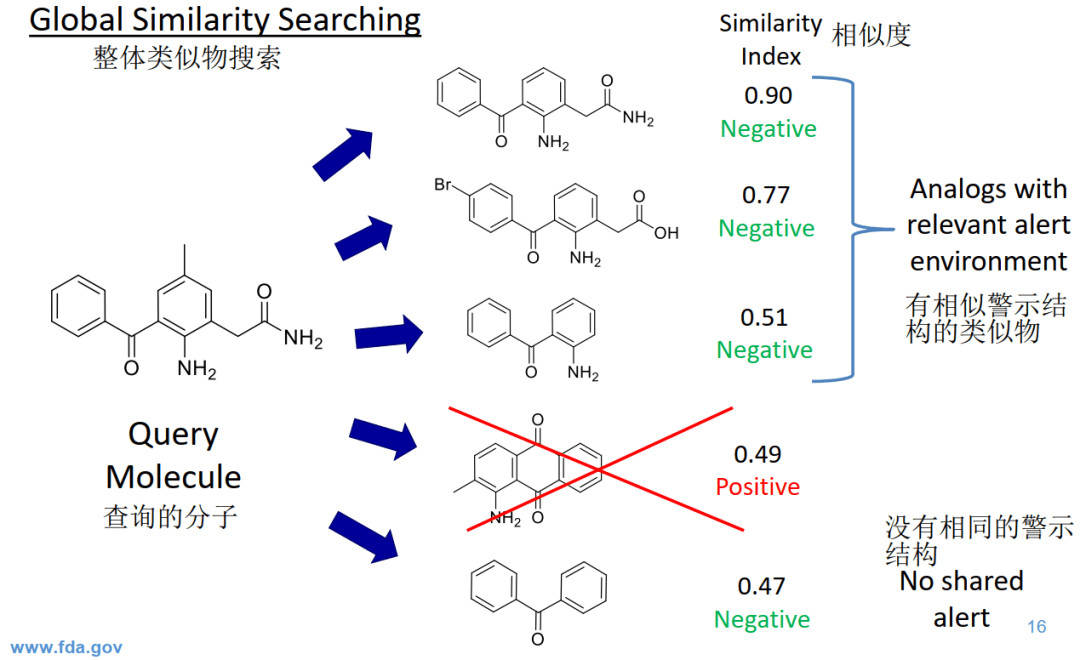
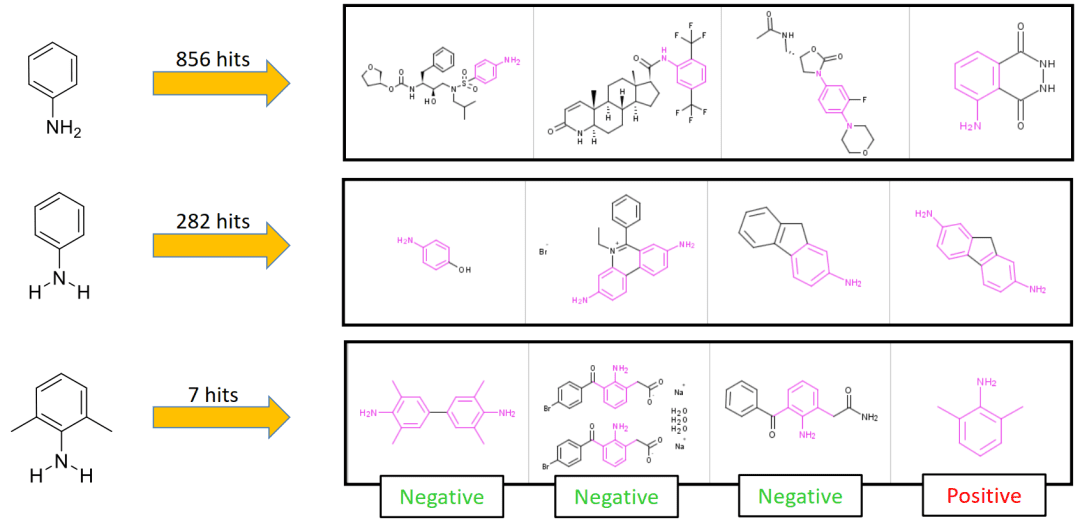
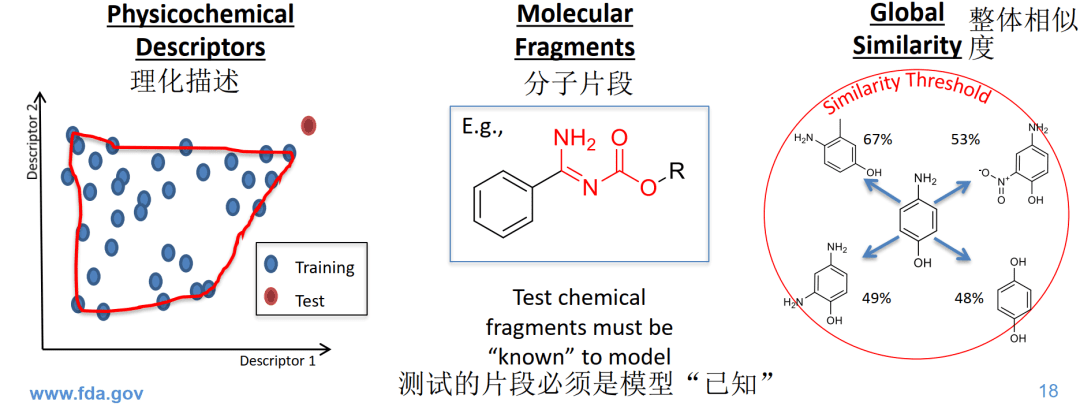
OECD Validation Principles To facilitate the consideration of a (Q)SAR model for regulatory purposes,it should be associated with the following information:出于监管目的考虑(Q)SAR模型,应将其与以下信息相关联:a defined domain ofapplicabilityappropriate measures of goodness‐of‐fit, robustness and predictivitya mechanistic interpretation, if possibleModel output “… can be reviewed with the use of expert knowledge in order to provide additional supportive evidence on relevance of any positive, negative, conflicting or inconclusive prediction and provide a rationale to support the final conclusion.”模型输出“……对于得到的任何阳性、阴性、相互矛盾或无法得出结论的预测结果,可根据专家知识进行综合评估,提供进一步支持性证据,合理论证并得出最终结论。“Identify and interpret alerting portion of the molecule Consider mechanism of reactivity, where possible Assess training set structures used to derive an alert and mitigating features Consider data from structurally similar compound (analog) Expert knowledge is applied to all (Q)SAR analyses conducted in-house by FDA/CDER专家知识应用于FDA/CDER内部进行的所有(Q)SAR分析Application of Expert Knowledge Identifying StructuralAnalogs Sub-Structure Searching for AnalogsReturn smultiple hits containing a particular sub-structure, e.g. primary aromatic amineCan refine the query to identify the most relevant analogs For bacterial mutagenicity, local similarity is important.The most globally similar analog may not be the most relevant Applicability Domain Measurement Applicability Domain: Region of chemical space within whicha model makes predictions with a given reliability 适用域:模型在具有给定可靠性的情况下进行预测的化学空间区域Chemicalspacedefinedbystructuralattributes/propertiesof training setmoleculesOut-of-Domain (OOD) Definitions Overall, different models have different coverage (applicability domain measurement) 总体而言,不同的模型具有不同的覆盖范围(适用性域)Even modelsusing the same general method (e.g.,fragment-based statistical models)can differ incoverage 即使使用相同通用方法的模型(例如,基于片段的统计模型)的覆盖范围也可能不同Can be used to our advantageto obtain a validprediction However,when multiple models yield OODs, then extraattentionneeded Impact of Expert Knowledge Particularlyuseful for resolving ambiguous(Q)SAR outcomes, suchas equivocalpredictions or out-of-domainresults对于解决模棱两可的(Q)SAR结果(例如模棱两可的预测或域外结果)特别有用 + =positive阳性,− =negative 阴性,Eqv =equivocal两可,OOD = out-of-domain域外For 3 models in combination (n = 519 chemicals): •Predictions for 50% of chemicals in agreement •Predictions for 13% of chemicals changed based on expert knowledge FDA/CDER Computational Toxicology Consultation Service (CTCS)Common ICH M7 Review Questions Have we seen this compound before?Are experimental data available?Havewe previously performed a (Q)SAR analysis for thiscompound?Are there data for related compounds?Chemical registration enables us to answer these questionsCTCS Chemical Registration Process Evaluation of Applicant (Q)SAR Data
评估申请人的(Q)SAR数据
(Q)SAR Software AcceptabilityUnder the ICH M7 guideline, Applicants may submit (Q)SAR analyses performed using models that are fit-for-purpose 根据ICH M7指南,申请人可以提交使用适合目的的模型所进行的(Q)SAR分析CDER has prior knowledge of several commercial and freely available (Q)SAR software CDER对一些商业和免费的(Q)SAR软件具有先验知识For software that CDER has no prior knowledge of, supporting documentation demonstrating that a model is fit-for-purpose is recommended (e.g., QMRF) 对于CDER不了解的软件,建议使用证明模型适合目的的支持文档(例如QMRF)•Predict bacterial (Ames) mutagenicity •2 models: expert rule-based and statistical-based •Consistent with OECD Validation Principles Applicant (Q)SAR submissionsTypically, only problematic (Q)SAR submissions are sent to us for evaluation •Well-documented submissions are handled by review divisions
备有证明文件的提交文件由审核部门处理
•If a reviewer is concerned about the quality of a submission, or it uses an unfamiliar software, it is sent to us.
如果审评人员担心提交的质量,或使用的软件不熟悉,则会将其发送给我们。
•Quality Issues: single methodology, read-across only, overall conclusions conflict with predictions with no explanation
质量问题:单一方法论、只能通读、总体结论与预测相冲突,没有任何解释。General rule is: Trust, but verify. Predictions are re-run only if there is a concern. 一般规则是:信任,但要验证。仅在存在问题时才重新运行预测。
Predictions with the most recent software version are preferred. Old predictions are acceptable unless there are known model changes that could impact conclusions.
最好使用最新版本的软件预测。除非存在可能影响结论的已知模型更改,否则旧的预测是可以接受的。
Expert analysis serves as a buffer to prediction changes with different software versions
专家分析可作为不同软件版本变化预测的缓冲。
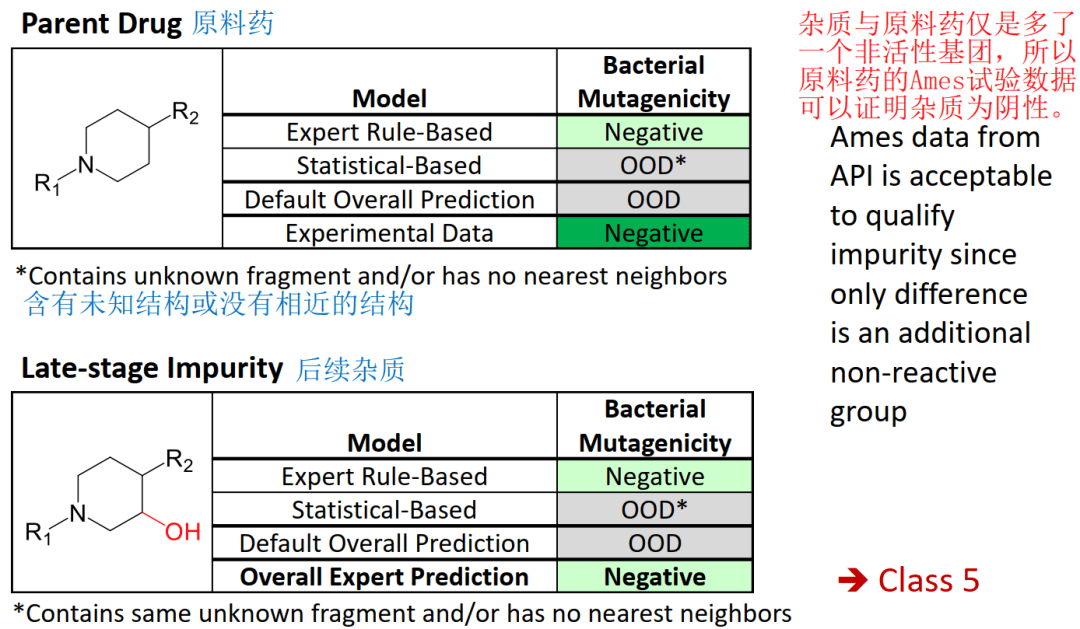
Common problem for new drug impurities 18% of impurities in new drugs approved in2016 and 2017 had an out-of-domain (Q)SAR result, based on an internalstudy 根据内部研究,2016年和2017年批准的新药中18%的杂质出现域外的(Q)SAR结果Anout-of-domain result is not a predictionand doesnot contribute to a Class 5assignment Applicationof expert knowledge can be used to addressthese gapsbut higher bar toacceptance FDA/CDERuses a 2nd statistical system toresolve most out-of-domains in internalanalysesFDA/ CDER使用第二版统计系统来解决内部分析中大多数域外的问题Theseare areas with the greatest need for improved databasesandmodels Example – Out-of-Domain (OOD)Relevant Information for ReportingName and version of software and (Q)SAR modelsused
使用的软件和(Q)SAR模型的名称和版本
Predictionclassification criteria, such as the cutoff or threshold values to define apositive/negative/equivocalresult
预测分类标准,例如定义阳性/阴性/两可结果的临界值或阈值
Individualpredictions, as well as the overall conclusion(impurityclass)
个人预测以及整体结论(杂质分类)
Confirmation that theimpurity is within the model’s domainofapplicability
确认杂质在模型的域内
Descriptionof any confirmatory application of expert knowledge, including analogs (whereappropriate)
说明对专家知识进行任何确认性应用的信息,包括类似物(如果适用)
Rationale for superseding any prediction
取代任何预测的理由
Raw (Q)SARoutputs
原始(Q)SAR输出
Ames data for structurally related compounds used to confirm or refutea prediction
用于确认或反驳预测结果的与结构相关的化合物的Ames数据
Commonly Used Report FormatConcluding Remarks
Application of expert knowledge is an importantcomponentof (Q)SAR assessmentunder ICHM7 应用专家知识是ICH M7下(Q)SAR评估的重要组成部分Model transparency and interpretability facilitate application of expert knowledgeEffective structural analog searching iscritical Expert review ofpredictions is standard practice atFDA/CDER对预测结果的专家审查是FDA/ CDER的标准做法Regulatory (Q)SAR submissions still varysignificantly inquality. Areas forimprovement:提交的监管(Q)SAR质量仍然存在很大差异。需要改进的方面:Use of appropriatemodels (expert rule-based andstatistical-based)that areconsistent with OECD validation principles 使用符合经合组织验证原则的适当模型(基于专家规则和基于统计的模型)— Mayneed to provide supporting documentation Appropriate handlingof out-of-domainresults Adequate documentation of assessments, particularly ifmodel predictions are overruled based on expert knowledge 充分的评估文件,特别是如果基于专家知识否决了模型预测的情况下Internal process improvements enable CTCS to handle alarge volume of(Q)SAR consultationrequests 内部流程的改进使CTCS能够处理大量(Q)SAR咨询请求Dedicated team of(Q)SARexperts Closecommunication and collaboration with review stafftoensure needs are met Robust chemical registration system Integration of (Q)SAR consults into review management platformExternal collaboration and outreach ensureaccessto state-of-the- art models anddatabases Conduitfor interacting with pharmaceutical stakeholders toshare knowledge andexperiencesParticipation inindustry consortia advancing the science of(Q)SAR Modelling Identifies opportunities for future projects 特别声明:本文信息根据互联网信息翻译整理,仅供学术研究。
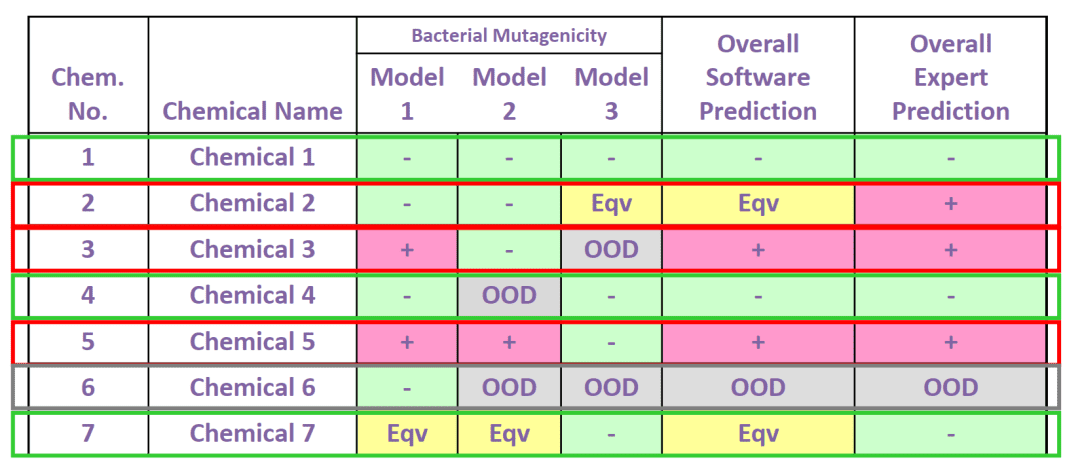 + =positive阳性,− =negative 阴性,Eqv =equivocal两可,OOD = out-of-domain域外